How to Choose Your Dream Wedding Bouquet
Of everything you will carry on your wedding day, your bouquet is the one thing that will be in almost every single photograph. That’s why this blog post on How to Choose Your Dream Wedding Bouquet Is important.
It will be in your getting-ready photos. Your first look. Your ceremony shots. Your portrait session. Your reception entrance. Every time someone points a camera at you, your bouquet will be right there, in your hands, against your dress, framed by the most important moments of your life.
And yet somehow, the bouquet is one of the last things most brides think about.
The dress gets months of consideration. The venue gets weeks of research. The bouquet gets a Pinterest save and a five-minute conversation with a florist, and then suddenly it is the week before the wedding and you are trying to describe something you cannot fully articulate to someone you have only just met.
“This is not how your dream bouquet gets made.”
Your bouquet is not a prop. It is not an accessory. It is the one thing your hands will hold as you walk toward the person you are choosing for the rest of your life. It deserves real thought, real intention, and a real guide to help you figure out exactly what you want and how to get it
That is what this post is. How to choose your dream wedding bouquet
By the time you finish reading, you will know every bouquet style, every flower worth knowing, how to choose what works for your dress and your body, how to talk to your florist like you know exactly what you want, and how to make sure what arrives on your wedding morning is exactly what you pictured.
Why Your Wedding Bouquet Matters More Than You Think
1. It Is in Every Photograph Forever
Let us start here because this is the fact that changes everything.
Your bouquet will appear in more photographs than almost any other detail of your wedding. More than your shoes, which only appear in a few styled shots. More than your earrings, which are occasionally visible. More than your cake, which gets its moment and then gets eaten.
Your bouquet is present for the entire story.
“Whatever you choose, you will look at it for the rest of your life.” That is not a reason to overthink it into paralysis, it is a reason to give it the same intentionality you give your dress.
2. It Ties Your Entire Look Together
Your bouquet is the bridge between your dress and your setting. The right bouquet pulls together your colour palette, complements the texture of your gown, reflects the aesthetic of your venue, and completes your bridal look in a way that nothing else can.
A lush, romantic garden bouquet in a formal ballroom can feel mismatched. A tight, structured posy in a wildflower meadow can feel out of place. When your bouquet is chosen with your full look in mind, dress, venue, aesthetic, season, it brings everything together into one cohesive vision.
“Your bouquet does not just match your wedding. It completes it.”
3. It Is Something You Actually Hold
This matters more than people acknowledge.
Your bouquet needs to feel good in your hands. Not just look good in photographs. You will carry it for several hours, through the ceremony, through photographs, through your reception entrance. If it is too heavy, too wide, too unwieldy, or physically uncomfortable to hold for extended periods, it will affect how you carry yourself in every photograph.
The right bouquet is beautiful and holdable. Both. Not one or the other.
The Main Wedding Bouquet Styles And What Each One Says
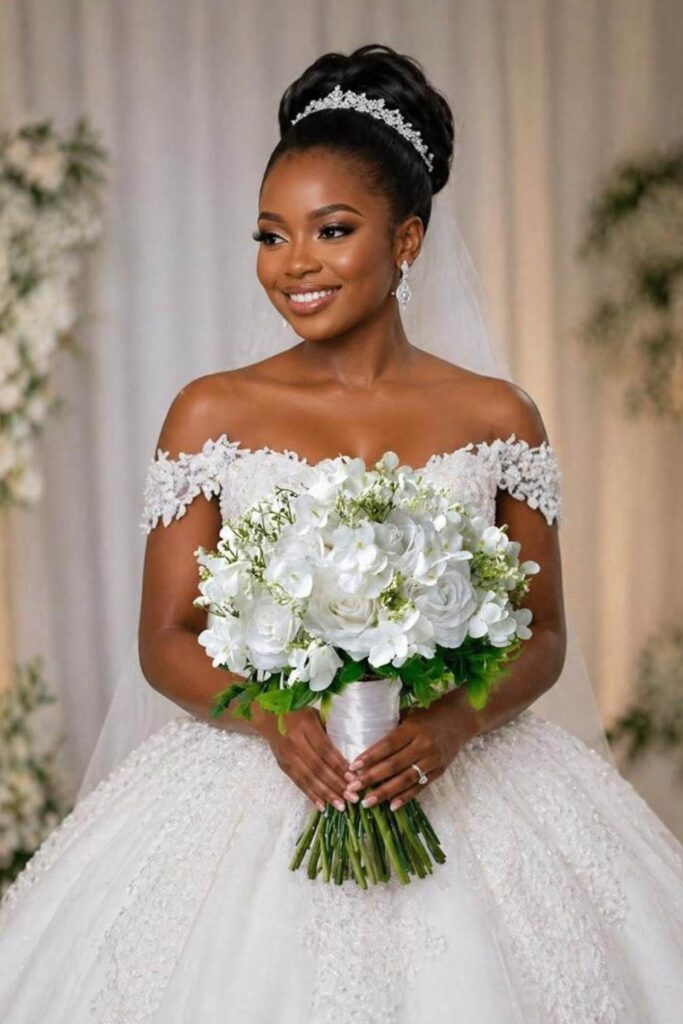
Photo Credit: all_bellaz
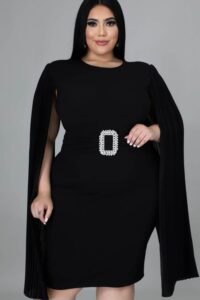
Read this: 50 Plus Size Black Wedding Guest Dress Ideas
1. The Round or Posy Bouquet

Photo credit: Taylor Francis
This is the most classic and most popular wedding bouquet style in the world, and it has been for decades. And it remains popular for a very simple reason: it works.
A round or posy bouquet is a tightly gathered arrangement of flowers, all cut to similar lengths, forming a neat, dome-shaped bunch. It is clean, symmetrical, and endlessly versatile. It works with almost every dress silhouette, almost every aesthetic, and almost every bride.
What it says: Classic. Elegant. Romantic. Timeless.
Best for: Brides who want something reliably beautiful without drama. Traditional church weddings. Formal receptions. Brides who want their flowers to complement rather than compete with their dress.
Sizes matter: A posy can range from a small, intimate handful of blooms to a lush, full round arrangement. The size should be proportionate to your frame, a very large round bouquet on a petite bride can overwhelm.
A very small posy on a tall bride with a dramatic gown can look underwhelming.
“When in doubt, the round bouquet is almost never wrong.”
2. The Cascade or Waterfall Bouquet

This is the most dramatic and most formally glamorous bouquet style available. A cascade bouquet flows downward from a central round top, trailing flowers, greenery, and ribbons falling in a graceful waterfall effect that can extend anywhere from a few inches to a full dramatic length.
What it says: Grandeur. Romance. Old Hollywood glamour. Occasion.
Best for: Ball gown silhouettes, the scale of a cascade bouquet needs a dress with presence to balance it. Formal and black tie weddings. Brides who want their bouquet to make as much of a statement as their dress. Cathedral and grand venue weddings.
What to know: A full cascade bouquet can be heavy. If you go this route, make sure you have practiced holding it comfortably and that your florist has built it with weight in mind.
A beautiful bouquet that makes your arms ache by the end of the ceremony is not serving you.
“A cascade bouquet is a commitment, to drama, to elegance, and to making a genuine entrance.”
Also read: How to Choose a Wedding Dress for Your Body Type
3. The Garden Style or Loosely Gathered Bouquet

This is the bouquet that looks like it was picked from the most beautiful garden in the world, loose, abundant, slightly unstructured, and effortlessly romantic. No tight symmetry. No rigid shape. Just an abundance of blooms and greenery gathered together in a way that feels natural and lush and completely alive.
What it says: Romantic. Organic. Effortless. Personal.
Best for: Garden and outdoor weddings. Bohemian and rustic aesthetics. Brides who want something that feels alive and natural rather than structured and formal. Wildflower and meadow wedding vibes.
What to know: The garden style bouquet requires a skilled florist, because making something look effortlessly natural actually takes more skill than a structured round bouquet. The looseness needs to be intentional, not accidental.
“A garden bouquet looks like it happened naturally. The best ones never did.”
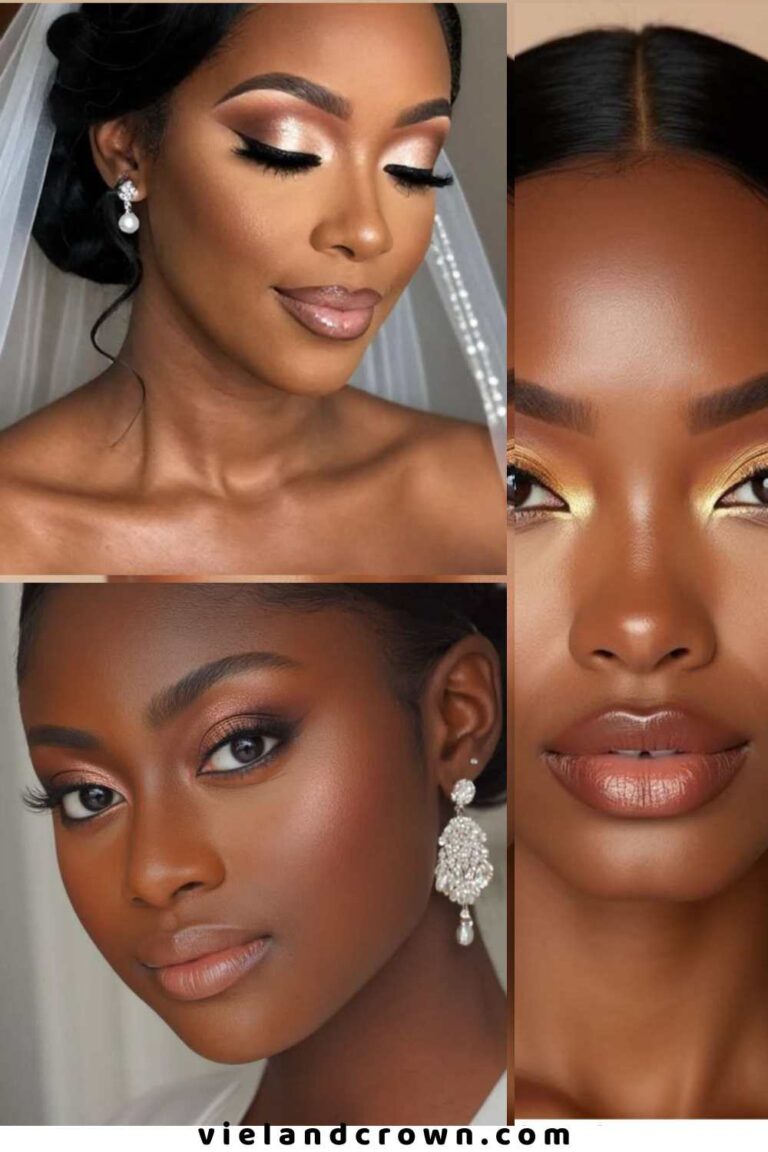
Also read: The Bridal Makeup Looks for Dark Skin Brides
4. The Arm Sheaf or Presentation Bouquet

Instead of being held in front of the body, an arm sheaf is cradled in the crease of the elbow, long-stemmed flowers and flowing greenery arranged horizontally and carried like a gift. Think of the bouquets presented to beauty pageant winners, but elevated, elegant, and completely bridal.
What it says: Sophisticated. Fashion-forward. Understated glamour. Modern.
Best for: Minimalist brides who want something different from the standard held bouquet. Clean, modern aesthetics. Column and sheath gown silhouettes where a traditional round bouquet might feel visually heavy. Brides who want their bouquet to feel like a fashion choice rather than a tradition.
What to know: An arm sheaf photographs differently from a held bouquet, it reads beautifully from the side and in full-length shots. Make sure your photographer knows you are carrying one so they can frame accordingly.
“An arm sheaf says you knew exactly what you wanted, and it was not what everyone else had.”
Check this also: How to Plan a Small Intimate Wedding That Still Feels Luxurious
5. The Pomander or Flower Ball
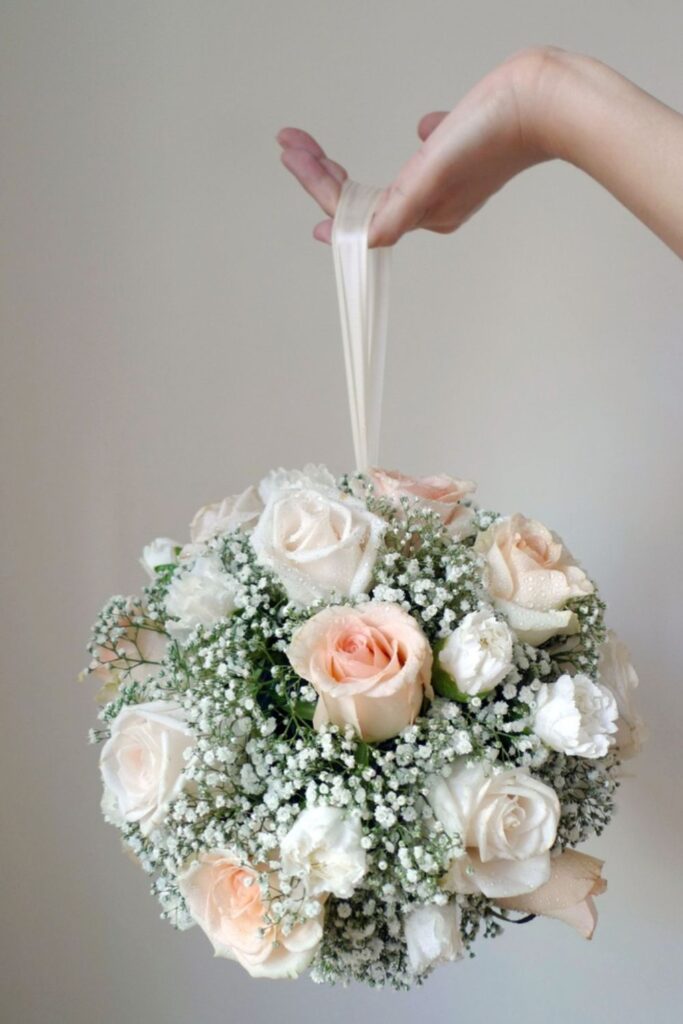
A pomander is a sphere of densely packed flowers, a perfect ball of blooms, held by a ribbon loop over the wrist or hand. It is playful, whimsical, and surprisingly versatile in the right context.
What it says: Playful. Whimsical. Joyful. Unique.
Best for: Flower girls, the pomander is perhaps most commonly used for younger members of the wedding party. But a bride who wants something genuinely different, charming, and unexpected can absolutely carry one. Garden parties, intimate celebrations, and whimsical wedding aesthetics.
What to know: If you are considering a pomander as a bride, make sure the size is substantial enough to read as bridal rather than decorative. A larger, more lush pomander in a sophisticated color palette feels very different from a small, simple one.
Also read: How to Choose the Perfect Wedding Venue on a Budget
6. The Single Stem Bouquet
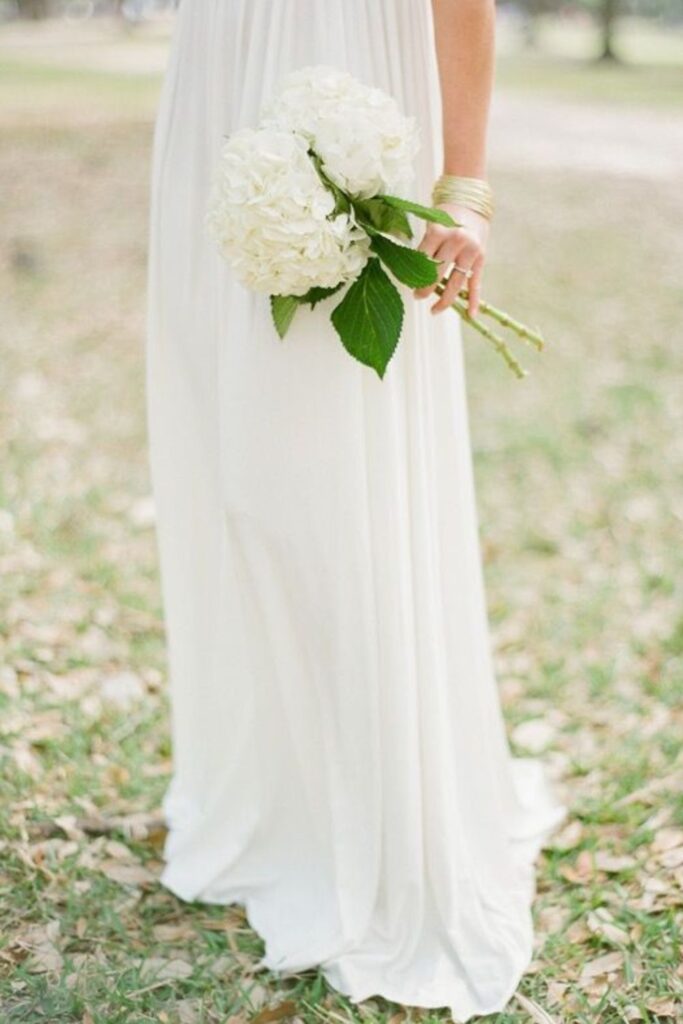
One flower. One stem. Held simply and deliberately.
The single stem bouquet is the most minimal, most modern, and arguably the most quietly confident choice a bride can make. A single garden rose, a dramatic protea, an elegant calla lily, or a lush peony, chosen for its beauty, its meaning, or both, held with intention.
What it says: Confidence. Minimalism. Intention. Complete security in exactly who you are.
Best for: Minimalist brides. Modern aesthetics. Civil ceremonies and intimate weddings. Brides who want their flowers to be a statement of simplicity rather than abundance.
What to know: A single stem bouquet only works when the stem and the bloom are genuinely beautiful and in perfect condition. There is nowhere to hide. Choose your flower with care, and make sure it is a specimen worth featuring alone.
“A single stem bouquet says everything by saying almost nothing.”
I recommend this: How to Plan a Wedding on a Tight Budget (Step by Step)
How to choose Your dream wedding Bouquet

Photo credit: all_ballaz
Flowers Worth Knowing for Your Wedding Bouquet
1. The Classics – Timeless for a Reason
Garden roses are the most popular wedding flower in the world, and deservedly so. Fuller and more romantic than standard roses, garden roses have a soft, ruffled quality that photographs beautifully and works in almost every bouquet style. Available in an enormous range of colours. Relatively affordable. Universally flattering.
peonies are the stuff of bridal dreams , full, lush, fragrant, and extraordinarily beautiful. They are seasonal, blooming primarily in late spring and early summer, which means they are not available year-round. If peonies are your flower, plan your wedding date or your flower sourcing around their season.
Ranunculus, looks like a cross between a rose and a peony, layered, delicate, and beautifully soft. It is one of the most versatile and most consistently beautiful wedding flowers available, and it is relatively affordable compared to peonies and garden roses.
Anemones are striking and graphic, a dark, dramatic centre surrounded by delicate petals, typically in white, blush, or deep burgundy. They add visual contrast and a slightly wild, editorial quality to any arrangement.
Sweet peas are delicate, fragrant, and extraordinarily romantic. They are soft and trailing and add a lightness to bouquets that heavier blooms cannot achieve. Perfect for loose, garden-style arrangements.
2. The Statement Flowers For Brides Who Want Something Different
Proteas are bold, architectural, and completely unforgettable. Native to South Africa, proteas come in dramatic sculptural forms, the king protea, the pincushion, the blushing bride, and they add a striking, unconventional beauty to any arrangement that photographs magnificently.
Dahlias are lush, full, and available in an extraordinary range of colours and forms, from small and delicate to large and dramatic dinner-plate varieties. They are a summer and autumn flower and create an immediate sense of abundance and richness in any bouquet.
Orchids are elegant, refined, and long-lasting. A cascade bouquet of white orchids is one of the most classically glamorous floral choices in all of bridal design. Individually, an orchid stem adds sculptural elegance to any arrangement.
Tulips are simple, clean, and beautifully modern. A monochromatic bouquet of tulips, all in one colour, all at similar lengths, has a graphic, architectural quality that is completely different from the lushness of roses and peonies. For a minimalist bride, a tulip bouquet is extraordinary.
Sunflowers are joyful, warm, and completely unpretentious. For a bride whose wedding is relaxed, outdoor, and full of warmth and colour, sunflowers bring a genuine happiness to a bouquet that no other flower quite replicates.
3. Greenery -The Element That Makes Everything Look More Expensive
Never underestimate greenery. It is not filler, it is foundation.
Eucalyptus is the most widely used and most universally loved wedding greenery. Its silvery-green color, its beautiful natural shape, and its subtle fragrance make it a perfect complement to almost any bloom. It also happens to be one of the most affordable greenery options available.
Ferns add a lush, romantic, slightly wild quality to bouquets. Soft fern fronds trailing from a garden-style bouquet create an effortlessly beautiful, woodland feel.
Olive branches are elegant and slightly Mediterranean, their silver-green leaves and delicate structure add a sophistication to arrangements that feels timeless and refined.
Trailing ivy creates movement and drama in cascade and loosely gathered bouquets. Long trails of ivy flowing from the base of a bouquet add a romantic, almost Pre-Raphaelite quality that is beautiful in photographs.
“The right greenery is not background. It is what makes the flowers sing.”
How to Choose the Right Bouquet for You
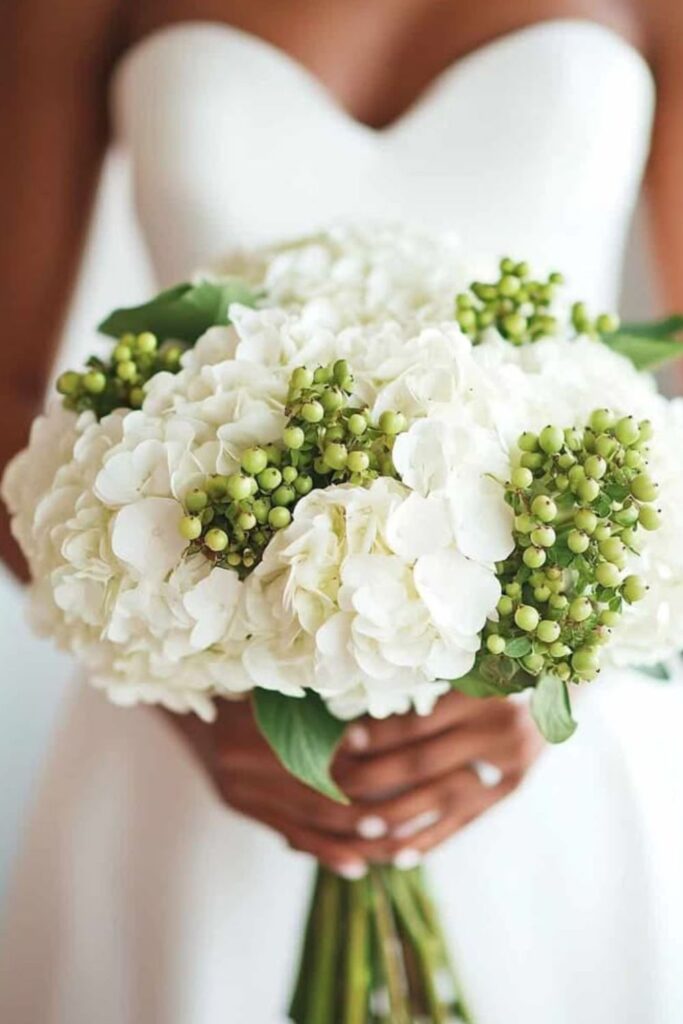
1. Match Your Bouquet to Your Dress Silhouette
This is one of the most important and most overlooked rules of bouquet selection.
*Ball gown: A full, dramatic ball gown needs a bouquet with presence, a large round bouquet, a full cascade, or a lush garden-style arrangement. A small posy will disappear against the scale of the skirt.
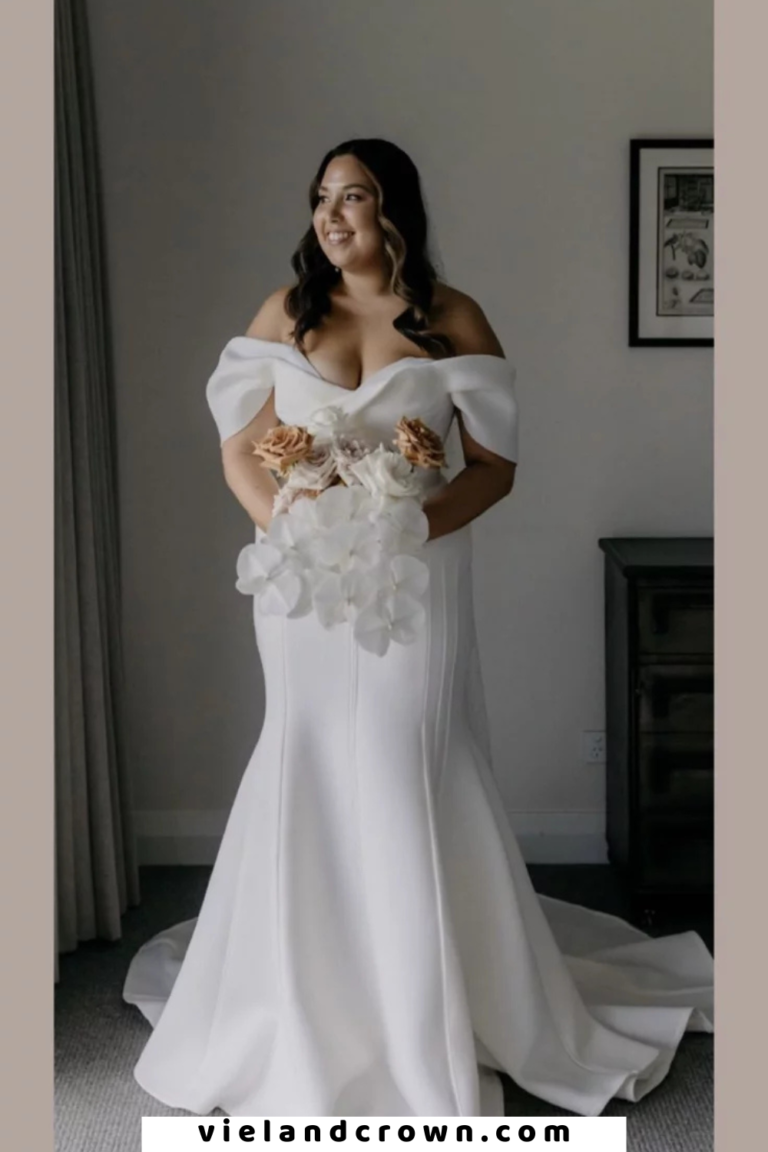
Mermaid or trumpet gown: The fitted, body-conscious silhouette of a mermaid gown is beautifully complemented by a long cascade bouquet or a loosely gathered arm sheaf. A very large round bouquet can look visually heavy against a sleek silhouette.
A-line: The A-line is the most versatile silhouette, it works with almost any bouquet style. A classic round bouquet is traditional and beautiful. A loosely gathered garden bouquet is romantic. An arm sheaf is modern and unexpected.
Column or sheath: A sleek, minimal gown is perfectly paired with a single stem, an arm sheaf, or a small, elegant posy. The clean lines of the dress are better served by simplicity than by abundance.
Tea-length or short dress: A smaller, more playful bouquet, a small round posy, a pomander, or a single stem, is proportionate to a shorter silhouette. A large cascade bouquet on a tea-length dress creates visual imbalance.
Also read: How to Choose Your Wedding Theme as a Bride
2. Match Your Bouquet to Your Body Proportions
Beyond the dress, consider your own frame.
Petite brides: A large, heavy bouquet can overwhelm a smaller frame. Choose something proportionate, a medium round bouquet, a small garden-style arrangement, or an arm sheaf that elongates rather than widens.
Tall brides: A full cascade, a large round bouquet, or a dramatic arm sheaf all work beautifully on a taller frame. The scale of the bouquet matches the presence of the bride.
Fuller figure brides: A medium to large round bouquet or a loosely gathered garden bouquet at mid-torso level is generally the most flattering. Avoid very small bouquets that can look disproportionate, and very long cascades that draw the eye downward.
“Your bouquet should feel like it belongs in your hands, not like it is wearing you.*
3. Match Your Bouquet to Your Wedding Aesthetic
Formal and classic: Round bouquet, cascade, or lush peony and rose arrangement in white, blush, or cream.
Romantic and garden: Loosely gathered garden bouquet in soft blush, peach, dusty rose, and lavender with abundant greenery.
Bohemian: Wildflower-inspired arrangement with dried elements, pampas grass, proteas, and trailing greenery in warm, earthy tones.
Modern and minimalist: Single stem, arm sheaf, or a sleek monochromatic round bouquet in a bold single color.
Tropical or destination: Bird of paradise, anthuriums, tropical foliage, orchids, and bold colors in rich, warm tones.
Nigerian or African cultural wedding: Bold, vibrant colors, deep reds, bright oranges, rich purples, and warm yellow, in a full, lush arrangement that complements the color and energy of a traditional or Aso-ebi celebration.
4. Consider the Season and What Is Actually Available
This is the practical consideration that most brides skip, and then face disappointment when their florist tells them their chosen flowers are not in season.
Spring: Peonies, ranunculus, sweet peas, tulips, anemones, garden roses, lilac, hyacinth.
Summer: Dahlias, sunflowers, garden roses, lavender, sweet peas, wildflowers.
Autumn: Dahlias, chrysanthemums, garden roses, proteas, dried botanicals, berries, foliage in warm tones.
Winter: Amaryllis, anemones, roses, orchids, evergreen foliage, dried elements, berries, hellebores.
Choosing seasonal flowers does two things simultaneously. It reduces cost — in-season flowers are more affordable than out-of-season ones. And it creates a bouquet that feels genuine and connected to the time of year rather than forced.
“A seasonal bouquet is always more beautiful than one that fights its own calendar.”
How to Talk to Your Florist About Your Bouquet

1. Come With Images, Not Just Words
Words like “romantic” and “natural” and “elegant” mean different things to different people. An image means the same thing to everyone looking at it.
Before your florist consultation, gather ten to fifteen images of bouquets, or elements of bouquets, that genuinely speak to you. They do not all need to be identical. They just need to represent the feeling you are going for. Your florist will identify the common thread and use it to build your vision.
“Bring images of what you love and images of what you absolutely do not want.” Both are equally useful information.
2. Be Honest About Your Budget
Your florist needs to know your bouquet budget from the very beginning of the conversation, not at the end after they have fallen in love with a design that costs three times what you have available.
Be direct. Say the number. A good florist will work creatively within your budget. The wrong florist will make you feel embarrassed about it.
“The bouquet budget conversation is not awkward. It is just honest.”
3. Ask to See Examples of Their Work in Your Style
Before you book a florist, ask specifically to see examples of work that matches your aesthetic.
If you want a loosely gathered garden bouquet and their portfolio is full of tight, formal arrangements, they may not be the right florist for your vision, regardless of how skilled they are.
4. Confirm Everything in Writing
Your bouquet style, the specific flowers agreed on and acceptable substitutes if any are unavailable, the colors, the size, the delivery time on the morning of your wedding, and the total cost , all of it should be in your contract.
“If it is not in writing, it is not confirmed.”
Also read: Things Nobody Tells You About Planning a Wedding
Practical Tips for Your Wedding Morning

1. Store Your Bouquet Correctly Until the Ceremony
Fresh flowers need water and cool temperatures to stay at their best. Your florist should deliver your bouquet in water or with a water source. Keep it in a cool room, not in direct sunlight or near a heat source, until you are ready to walk.
2. Have a Designated Person to Hold Your Bouquet
During the ceremony, there will be moments when you need both hands, exchanging rings, holding your partner’s hands. Designate your maid of honor specifically to hold your bouquet during these moments. Make sure she knows this is her responsibility before the day.
3. Ask Your Florist About a Tossing Bouquet
If you plan to do a bouquet toss, a tradition at many weddings, ask your florist to prepare a separate, smaller tossing bouquet. Tossing your actual bridal bouquet means losing it forever, and many brides choose to preserve their bouquet as a keepsake after the wedding.
4. Consider Preserving Your Bouquet After the Wedding
Flower preservation, pressing, drying, resin encasing, has become an increasingly beautiful way to keep your bouquet long after the wedding day. If this is something you want, research preservation options before the wedding and make arrangements with a specialist in advance. The process typically needs to begin within twenty-four to forty-eight hours of the wedding.
“Your bouquet tells the story of your wedding day. Some brides choose to keep that story forever”
Final words On How to choose your dream wedding Bouquet
You are going to hold this bouquet as you walk toward the person you love most in the world.
It will be in your hands when you say your vows. It will be in your arms in the photographs you look at for the rest of your life. It will sit on your table at the reception and fill the room with fragrance and beauty throughout the celebration.
It deserves your attention.
Not anxiety. Not paralysis. Just genuine, intentional thought about what matters to you what flowers mean something, what colors complement your vision, what style feels like you on your most beautiful day.
Choose with intention. Trust your florist with the execution. And on your wedding morning, when they hand it to you and you feel the weight of it in your hands, take a breath and let it be everything you imagined. And don’t forget to save this guide on How to choose your dream wedding Bouquet.