Things Nobody Tells You About Planning a Wedding
Let’s Discuss about Things Nobody Tells You About Planning a Wedding.
You have done the research after watching videos on Youtube and Pinterest.
You feel ready.
And then you actually start planning your wedding, and everything you thought you knew gets turned on its head
Here is the truth that most wedding content will not tell you: there is a whole layer of wedding planning reality that nobody talks about. Not the pretty stuff, the color palettes, the dress inspiration, the floral arrangements. The real stuff. The logistical headaches, the emotional surprises, the decisions that sneak up on you when you least expect them, and the feelings at the end of the night that nobody prepares you for.
This post is about all of that.
So, if you are just starting your planning journey or you are deep in the middle of it, these are the things that brides consistently say they wished someone had told them before the wedding day arrived. Consider this your honest, no-filter guide to what wedding planning actually looks like beneath the surface.
The Real Side of Wedding Planning Nobody Shows You
Wedding planning content tends to focus on the beautiful decisions, the ones that make for good photographs and aspirational posts. What gets left out is the behind-the-scenes reality that catches most brides completely off guard.
Here are the real pain points that brides face but rarely see discussed:
You spend months building a vision in your head, and then vendors give you quotes, logistics create limitations, and reality begins to chip away at the dream. Managing that gap without losing your joy is one of the hardest parts of the process.
Your wedding is a team effort involving dozens of people, vendors, family members, guests, the wedding party, and a significant portion of your stress will come from managing those people rather than from the actual planning itself.
3. The emotional side is completely underestimated
Most brides expect to feel joy throughout the entire process and pure elation at the end. The reality is far more complex, and understanding that in advance makes it so much easier to navigate.
4. The small details carry real consequences
Things that seem minor in the planning phase, invitation weight, RSVP follow-ups, ceremony planning, turn out to matter enormously when the wedding day actually arrives.
With that said, let us walk through the specific things that nobody tells you, but absolutely should.
Things Nobody Tells You About Planning a Wedding
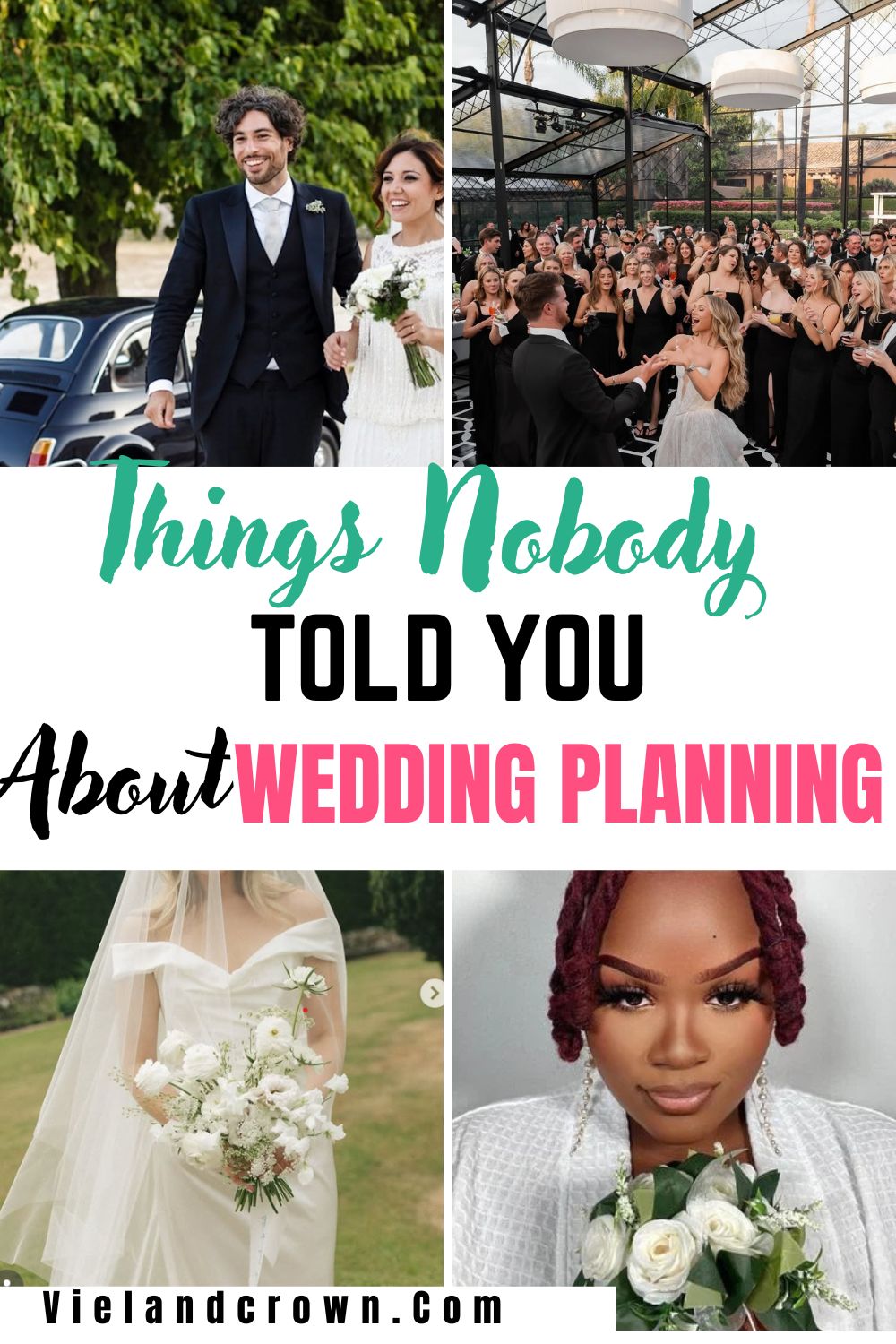
1. People Are Really Bad at RSVPs- And It Will Be Your Problem to Manage
If there is one thing that consistently surprises brides during the planning process, it is just how unreliable people are when it comes to responding to invitations.
You will send out your invitations. You will set a clear RSVP deadline. And then you will wait. not because they are not coming, but because people genuinely struggle to send a simple reply in a timely manner.
This matters far more than it might seem, because almost every major decision in your wedding is directly connected to your final guest count. How much food to order.How much alcohol to purchase. All of it flows from that number. And if you do not have an accurate count, you cannot make accurate decisions.
Here is what nobody tells you: you are going to have to follow up. Repeatedly. Even after your RSVP deadline passes, there will be guests who have not responded, and chasing them down will fall on you, or on someone you designate to help. This is not optional. It is a necessary part of the process.
Build your RSVP deadline into your timeline with enough buffer that you have time to follow up and still reach your final count before you need to give numbers to your caterer and other vendors. And if you do not have a wedding coordinator handling this for you, assign the follow-up task to a trusted member of your wedding party. Do not let it fall through the cracks, because the cost of getting your numbers wrong is real.
2. Invitation Weight Can Silently Blow Your Postage Budget
This is one of those details that sounds almost too small to matter , and then it doubles your stationery budget without warning.
If you are sending physical wedding invitations, the weight and thickness of your invitation suite directly determines your postage cost. And if you are not aware of this going in, the surprise can be significant.
Here is how it works: a standard single-sheet invitation that falls within a certain weight limit requires one stamp. But the moment you add additional inserts, an RSVP card, an accommodation card, a details card, an envelope liner, the overall weight of the suite increases. Add in hard card stock instead of standard paper, and you could be looking at double the postage cost for every single invitation you send.
Before you finalize your invitation design, take a fully assembled sample to your post office and have it weighed. Find out exactly how many stamps it requires. Then multiply that by the number of invitations you are sending and factor it into your budget.
This is a completely avoidable budget leak, but only if you know about it before you send everything out. Now you do.
3. You Are Going to Be in Your Wedding Dress for a Very Long Time
This is something that brides consistently underestimate, and it affects everything from the style of dress you choose to the comfort level you should be prioritizing during fittings.
Think about your actual wedding day timeline.
You will likely get into your dress during hair and makeup, sometimes three to four hours before the ceremony even begins. Then there is the ceremony itself. Then photographs, which can take one to two hours or more.
By the time your wedding day is over, you may have been in your wedding dress for eight, nine, or even ten hours.
That is an entire working day spent in a formal gown, and that reality should absolutely influence the decisions you make about your dress.
Think carefully about comfort alongside beauty.
Can you sit comfortably for extended periods? Can you actually eat in it, because you should eat, and we talked about that in our previous post.
This does not mean you have to compromise on the dress of your dreams. It means you should try your dress on with all of those things in mind, not just with how it looks when you are standing still in a boutique. Walk around in it. Sit down in it. Raise your arms.
Make sure that the dress that looks perfect in the fitting room is also going to feel wearable after hour seven of one of the most significant days of your life.
I recommend this: How to Choose Your Wedding Theme as a Bride
4. You Will Feel Emotional at the End of Your Wedding Night- But Not Always in the Way You Expect
This might be the most honest and the most important thing on this entire list.
Most brides expect their wedding day to end in pure, uncomplicated happiness. And there will absolutely be joy, enormous, overwhelming, beautiful joy.
But there is often something else sitting alongside it at the end of the night that nobody prepares you for, and that lack of preparation can make it feel confusing or even alarming when it happens.
Here is what many brides experience: at the end of the wedding night, after the last song has played and the last guest has left, there is sometimes a strange and unexpected sense of sadness. Not about getting married , about the wedding being over.
Think about what you have spent the past year, sometimes longer , doing.
You have been planning, researching, making decisions, communicating with vendors, attending fittings, managing guest lists, and pouring an enormous amount of your emotional energy into bringing this one day to life. That process has been a significant part of your daily life.
Your vendors have been part of your regular communication. The planning has given you a sense of purpose and direction and excitement.
And then, in what genuinely feels like the blink of an eye, it is over.
The wedding day that lived in your imagination for so long has happened, and now it is a memory. The vendors who have been in your inbox and your phone for months are no longer a daily presence. The planning that structured your days is done.
That emotional shift, the combination of happiness, exhaustion, love, and a quiet grief for something beautiful that has ended, is completely normal. It happens to so many brides.
It does not mean you are not grateful.
If you feel that way at the end of your wedding night, please do not beat yourself up.
Do not feel guilty for not experiencing pure elation every single second. Give yourself grace. You just did something extraordinary.
The wedding chapter is closing and the marriage chapter — the better, longer, more meaningful one, is just beginning.
5. Do Not Get So Caught Up in the Reception That You Forget to Plan the Ceremony
This is one of the most common and most avoidable mistakes in wedding planning, and it happens to even the most organized brides.
The reception gets the majority of the attention. The dinner, the cocktail hour, the dancing, the music, the décor, the timeline of events, all of it gets planned in meticulous detail. And it should, because those things matter.
But the ceremony, the actual reason everyone is there, the part where you make your promises and become married , often gets treated as an afterthought.
Brides assume it will take care of itself, or that the officiant will handle everything, and then find themselves in the final weeks before the wedding realizing they have not properly planned what is actually the most important part of the day.
Your ceremony needs to be planned with the same intentionality as your reception.
Think through the order of events carefully. Will there be any readings? If so, who is doing them and what are they reading? Will there be any musical performances, a song being sung live, a special piece being played? Will you include a unity ceremony of any kind, a candle lighting, a sand ceremony, a wine ceremony? What are you going to say to each other? Are you writing your own vows, and if so, how far along are you with them?
If you are working with a professional officiant or pastor who performs weddings regularly, they will guide you through the traditional structure and help you plan it properly.
But if you have asked a friend or family member to officiate your ceremony, which is a beautiful and personal choice, that person will need significantly more support and planning from you. Meet with them early. Walk through the entire ceremony together.
Make sure they are comfortable with what is expected and that the flow of the ceremony is clearly mapped out well in advance.
Do not let the ceremony be the thing you plan last. It deserves your full attention.
6. Your Feelings on the Wedding Day Will Be More Complex Than You Anticipated
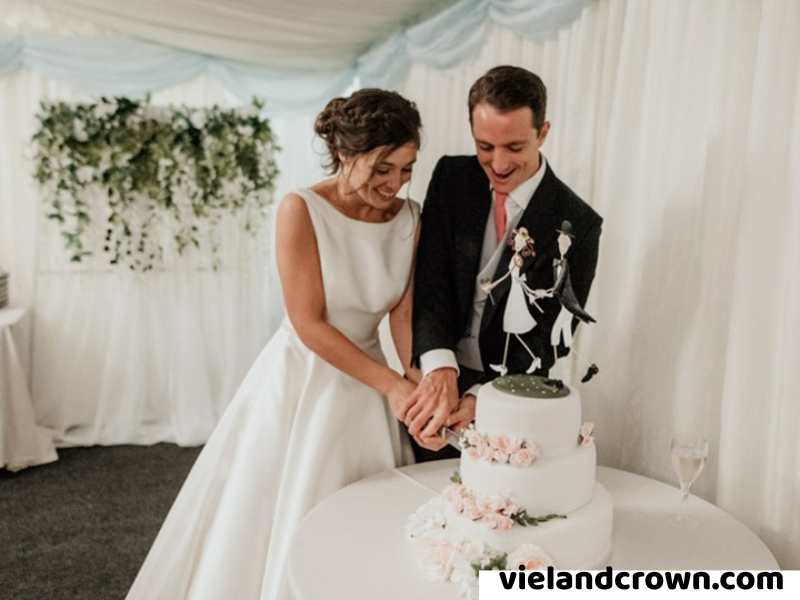
Photo credit : @ vivi_weddingplanning
Beyond the emotional experience at the end of the night, there is something broader worth preparing for: your wedding day emotions, in general, will likely be far more layered and complex than the simple happiness you have been imagining.
There will be moments of pure joy , breathtaking, overwhelming, tearful joy.
There will also be moments of stress. Moments where something does not go according to plan and you have to make a split-second decision.Moments where you are so busy greeting people and being present that you barely have a chance to eat or drink or breathe.
There will be moments where time feels like it is moving impossibly fast, and you desperately want it to slow down. There will be moments of deep emotion, looking at your partner at the altar, seeing your parents in the front row, dancing with the people you love most in the world.
And through all of it, you will be performing in a sense, being seen, being celebrated, being the center of attention , while also trying to be genuinely present and experience something deeply personal.
This is a lot. And the brides who navigate it best are the ones who go into the day with realistic expectations, not that it will be perfect, but that it will be real, and full, and complicated, and beautiful all at once. Give yourself permission to feel everything, without judging any of it.
I recommend this: 20 Most Forgotten Wedding Details Every Bride Needs to Know
7. The Post-Wedding Period Is a Real Adjustment- And It Is Okay to Find It Hard
Most wedding content ends at the wedding day. But life continues after, and the adjustment that follows is something very few people talk about.
After months of having a clear and exciting focus, the wedding, suddenly that focus is gone.
The planning is done. The vendors are paid and silent.
The excitement that surrounded you for so long has settled. And you are now simply married, living your regular life, without the project that defined your days for the past year.
For many brides, this transition comes with a sense of flatness or purposelessness that can be genuinely surprising. It is sometimes called the post-wedding blues, and it is far more common than anyone admits.
If you experience this, know that it is a natural response to a significant life transition. The antidote is usually to redirect that energy, into your new marriage, into a personal goal, into a new project or passion. Give yourself time to settle.
Be patient with yourself. And talk to your partner about how you are feeling, because they may be experiencing something similar.
Your wedding was a beautiful beginning. But it was always meant to be a beginning, not the destination.
Things Nobody Tells You About Planning a Wedding
A Summary – What to Take Away From All of This
Wedding planning is one of the most layered, emotional, logistically complex things you will ever do. And the brides who navigate it with the most grace are not the ones who had everything go perfectly, they are the ones who went in with honest, realistic expectations.
So here is what to hold onto from this post:
Follow up on RSVPs, do not assume people will respond on time, because they will not. Check your invitation weight before you mail anything.
Try your dress on with comfort in mind, not just aesthetics. Prepare yourself for the emotional complexity of the wedding day and the night after. Plan your ceremony with the same detail and care as your reception. And give yourself grace through all of it, before, during, and after.
Nobody tells you these things. But now you know.
This post showed you Things Nobody Tells You About Planning a Wedding.